This 2014 screenshot is retained for historical context. It isn’t a current setup guide.
Originally published April 28, 2014. Updated October 14, 2026.
“My computer crashed, and I can’t find that email anymore.”
“I want an email address with my business name, but I don’t want another inbox to check.”
I’ve heard both from clients. The problem isn’t wanting email to be simple. It’s having a setup that depends on one computer, several disconnected accounts, or settings nobody remembers.
My original solution was to bring different addresses into Gmail. That advice needs updating. So… let’s separate the email address you own, the company that hosts its mailbox, and the app you use to read it. Once those pieces are clear, the choices get easier.
Key Takeaways
- Your email address, mailbox provider, and email app are different parts of the setup.
- Use a business-owned address and a mailbox that syncs across your devices.
- Don’t build a new setup around Gmail’s retiring third-party POP fetching.
- Forwarding incoming mail doesn’t automatically configure outgoing replies.
- Website notifications and newsletters need their own sending checks.
- Keep recovery information and backups separate from everyday inbox access.

Written by Dotty Scott
Founder of Premium Websites, Inc.
Empowering small businesses to go from Invisible to Invincible.
The Three Pieces of Your Business Email
Your address is what clients see, such as hello@example.com. Your mailbox provider stores and delivers the messages. Your email app is the interface you open on a phone or computer.
Those pieces can work together without being supplied by the same company. A domain-based address doesn’t automatically mean your mailbox lives on your website server, and using Outlook doesn’t automatically mean all your email is stored only on your computer.
I recommend a domain-based address because it supports a consistent business identity and gives you more control over your public contact details. It isn’t a blanket legal requirement for every business owner, and the address alone doesn’t guarantee delivery.
Choose Where Your Mailbox Lives
Start with a provider that supports the way you work: web access, synchronized mail on your phone and computer, reliable account recovery, and support you can reach.
Google Workspace is one option for hosting a business-domain mailbox. Another provider may fit your existing tools better. The important question is whether the actual mailbox meets your needs, not whether its logo looks familiar.
Separating email from website hosting can reduce the impact of a website-hosting problem. It doesn’t make either service immune to outages, compromised accounts, or configuration errors.
What Changed About Bringing Other Mail Into Gmail?
October 2026 update: Google’s current notice schedules the end of Gmailify, third-party POP fetching, and third-party “Send as” support for January 2027. New configurations may be restricted during the transition.
This concerns using your primary Gmail account to fetch or send as a mailbox hosted elsewhere. Google says Gmail-to-Gmail and Google Workspace aliases aren’t affected, and third-party account access through the Gmail mobile app remains available.
Read Google’s third-party account support notice before planning a change. Its separate POP and Gmailify notice says previously imported messages remain in Gmail.
How to Manage Email From One Place
If Gmail is the interface you prefer, hosting your business mailbox in Google Workspace is different from using a free Gmail account to collect mail from an outside provider. Ask which arrangement you actually have.
You can also connect supported accounts to a provider’s own app or a mail client using its current IMAP and SMTP instructions. IMAP handles access to the mailbox; SMTP handles outgoing messages. Check the provider’s sign-in requirements rather than copying old server settings.
For several addresses serving the same person, an alias may be enough. A shared team inbox may need a different arrangement. Check who needs access, how replies appear, and whether your provider supports that setup.
Choose the Route That Matches Your Problem
| Your Need | What to Check |
|---|---|
| One business mailbox across devices | Choose a provider with web access and synchronized mail. |
| Several addresses for one person | Check whether aliases meet the need. |
| A team handling the same enquiries | Ask about a supported shared mailbox or team inbox. |
| Several providers in one app | Use a client that supports those accounts and current sign-in methods. |
| Missing website notifications | Check the form’s sending service, authentication, and delivery logs. |
Test Your Reply Address and Delivery
Send a message to your business address from another account. Open it on your phone and computer, then reply. Confirm that the recipient sees the correct business address and can answer it successfully.
Forwarding can bring incoming messages into another inbox, but it doesn’t automatically authorize that inbox to send from your business address. Test both directions.
For a domain you send from, ask your provider to check SPF, DKIM, and DMARC. These are domain-level authentication tools that help receiving services assess whether a sender is authorized. Google’s sender guidelines distinguish minimum requirements for ordinary senders from the additional requirements for bulk senders and recommend all three.
Treat Website Forms and Newsletters Separately
Your contact form, CRM, invoicing system, and newsletter platform may send messages independently of the app where you read email. Make a list of those senders so the technical setup covers each one.
A contact form should send through an authorized service. Use a sending identity that the service can authenticate, and put the visitor’s address in Reply-To when the form supports it. Pretending the message came from the visitor’s Yahoo or Gmail address can create authentication problems.
For newsletters, use a platform that supports opt-in management, unsubscribes, and delivery reporting. Paying for the platform doesn’t guarantee inbox placement. If you’ve received a rejection or spam warning, save the exact error for investigation. A spam-folder placement, an authentication failure, and an IP or domain blocklisting can have different causes. Let the actual error guide the next step.
Protect Access Without Depending on One Computer
A synchronized mailbox makes it easier to recover access after a device fails, but synchronization and backup are different. Deleting a message may remove it across connected devices. Check the provider’s recovery and export options for records your business needs.
Use a strong, unique password, enable multifactor authentication where available, and keep recovery details current. Store account credentials in a password manager rather than relying on an old message in the same inbox you’re trying to recover.
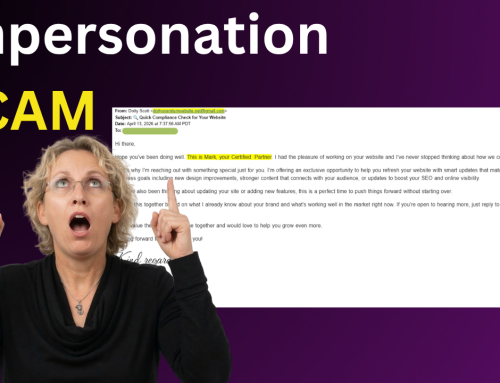
Cloud email doesn’t make a computer virus-proof. Suspicious links, attachments, and account impersonation still need careful handling. My real example of someone impersonating a web designer shows why checking the sender matters.
Before You Change Providers
Write down your mailboxes, aliases, forwarding rules, devices, and every system that sends business email. Confirm where old messages, contacts, and calendars are stored before moving anything.
Ask your provider for a migration plan and test the new mailbox before cancelling the old service. Mail-routing and authentication changes can affect delivery, so the person making them needs the correct details for your actual accounts.
Full transparency: there isn’t one set of settings that fits every business. If you’d like help understanding what your website and email systems are doing, schedule a Discovery Call. I’ve got your back.
Business Email FAQs
Can I keep my business address when I change providers?
Usually, if your business controls the domain and the new provider supports it. Plan the mailbox migration and mail-routing changes before ending the old service.
Do I need a separate mailbox for every address?
Not always. An alias may suit an extra address used by the same person. Separate users or a team inbox can need different access and storage arrangements.
Is Outlook less safe than webmail?
The app name alone doesn’t decide safety. Consider account protection, updates, provider controls, recovery, and how you handle messages.
Will forwarding make my replies use the business address?
Not automatically. Incoming forwarding and outgoing sending are separate settings. Verify the From address with a real reply test.